For parents and teachers
A puzzle book can be a pile of puzzles. These are built another way.
They show a method, let your child practice it, and then make it a little harder. Everything on this page is printed in the books, so you can check it in your own copy.
One episode, step by step
Book 1, Episode 2: The Cog Café. Five pages in a row, as they are printed.
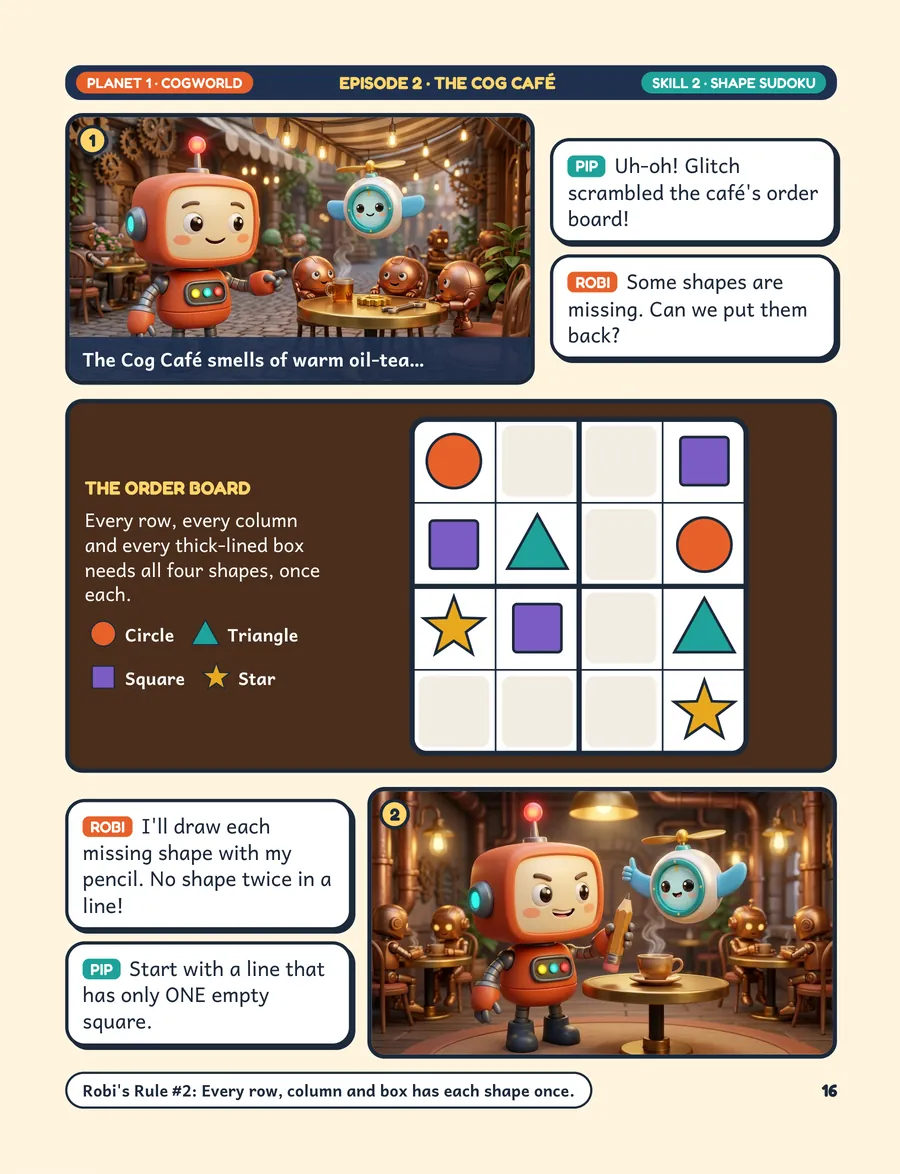
The comic sets the rule
Robi’s Rule #2: Every row, column and box has each shape once.
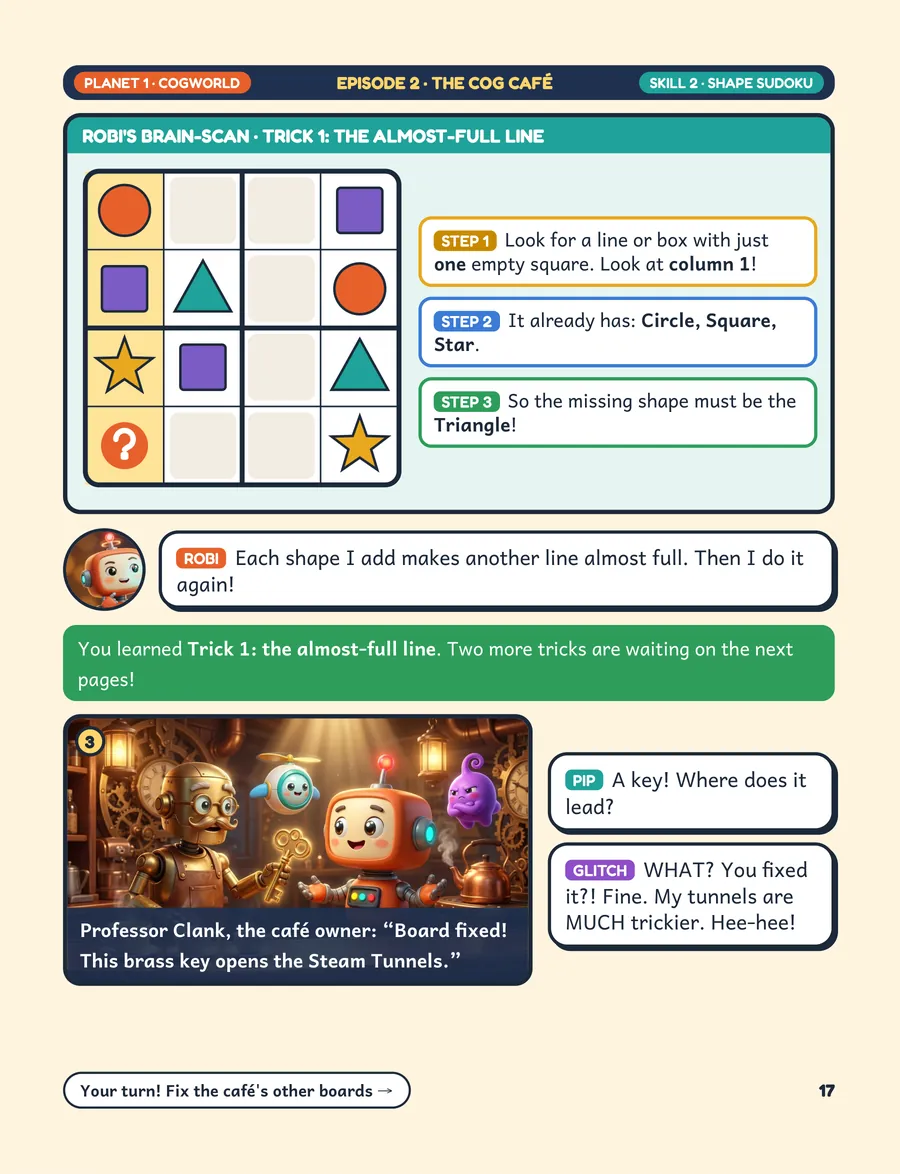
Robi shows one trick
Robi’s Brain-Scan works one example in three steps.
Each shape I add makes another line almost full. Then I do it again!
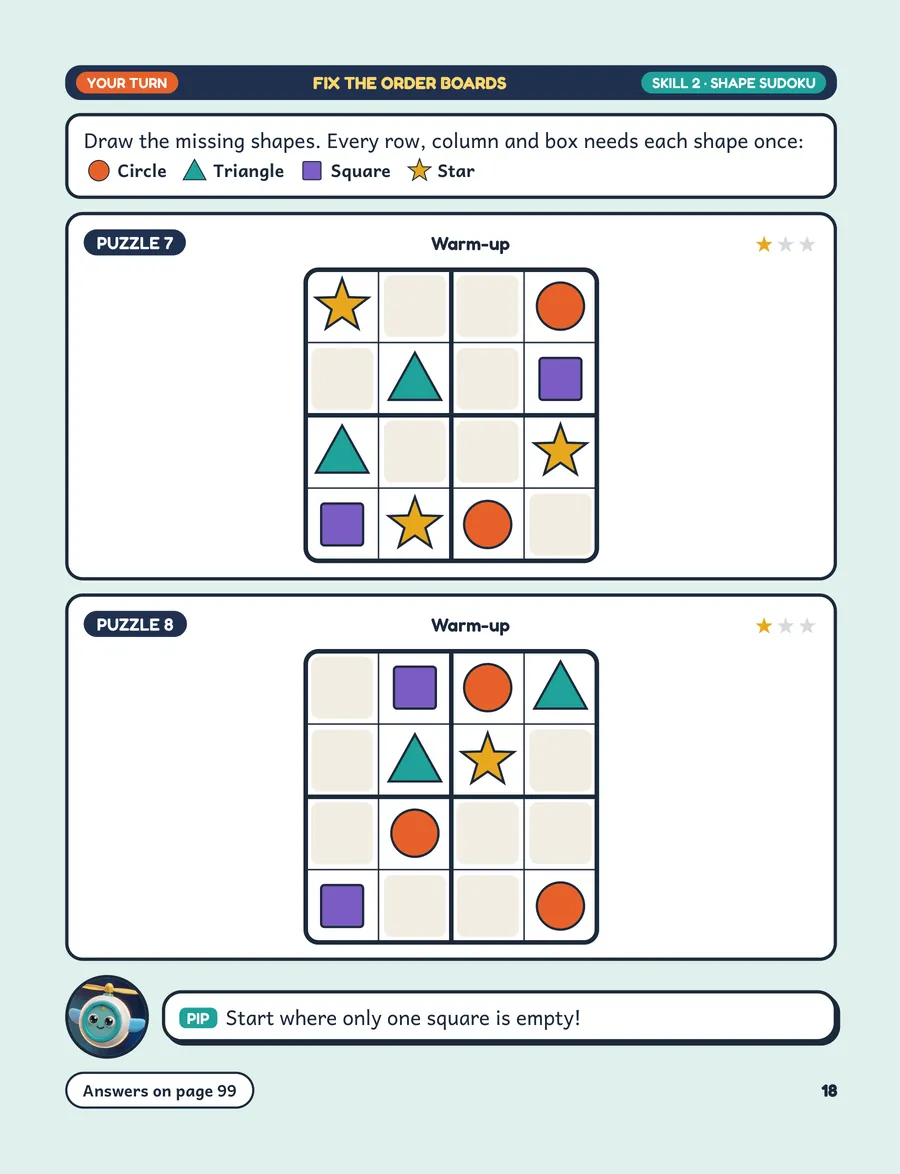
Your turn: warm-up
The first two puzzles need only the trick just shown.
Start where only one square is empty!
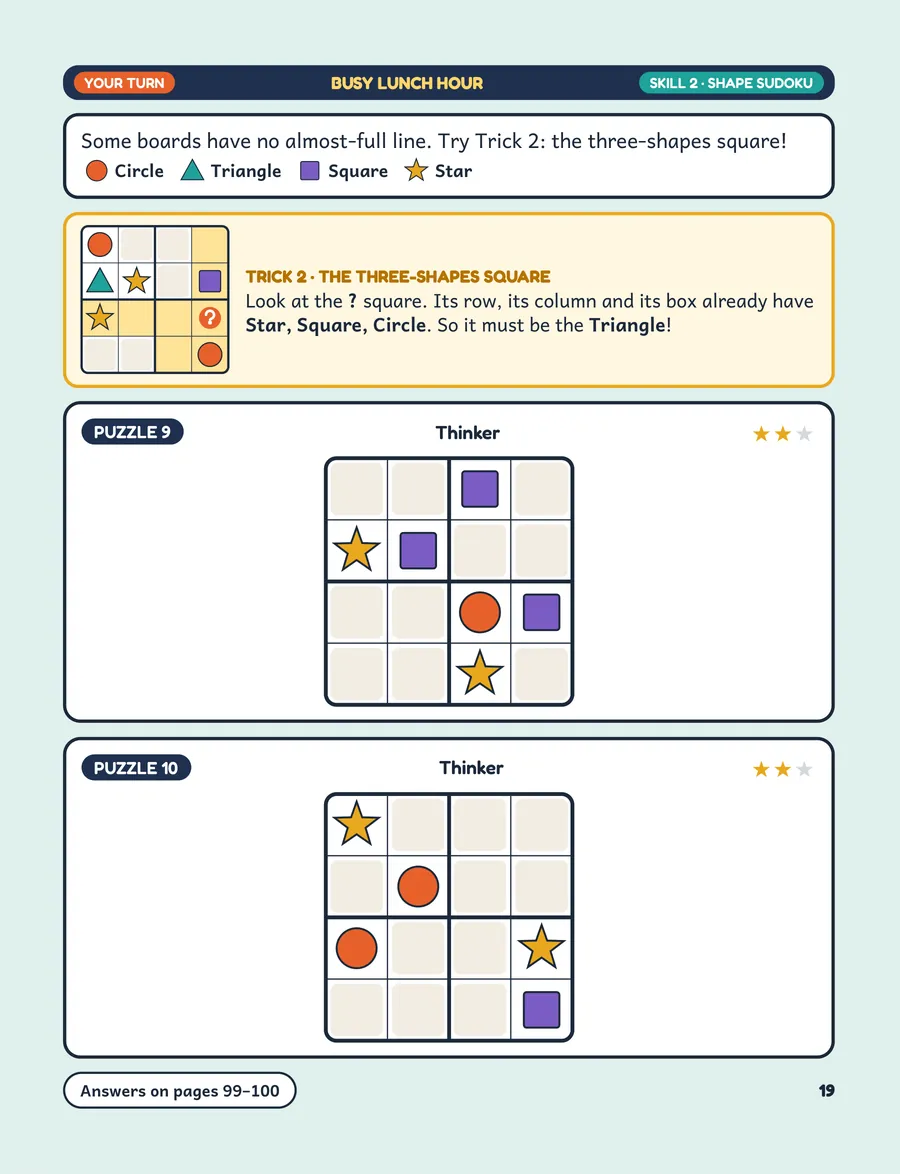
Thinker: a second trick
Some boards have no almost-full line, so this page teaches Trick 2, the three-shapes square, just above the two puzzles that need it.
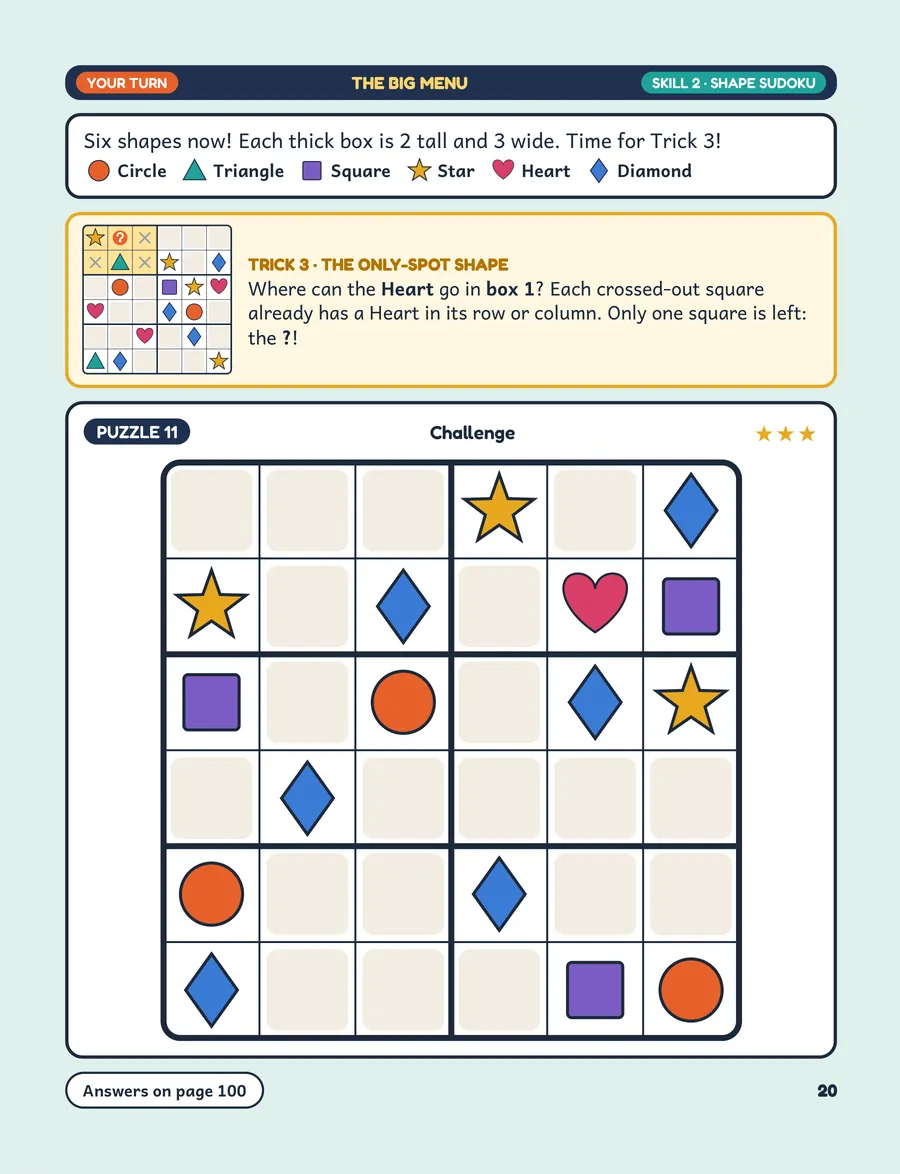
Challenge: six shapes
Six shapes now, bigger boxes, and Trick 3, the only-spot shape, shown on the page before the puzzle asks for it.
Six things you can check on the page
Each one is printed in the books. The pictures are real pages.
Nothing has to be guessed
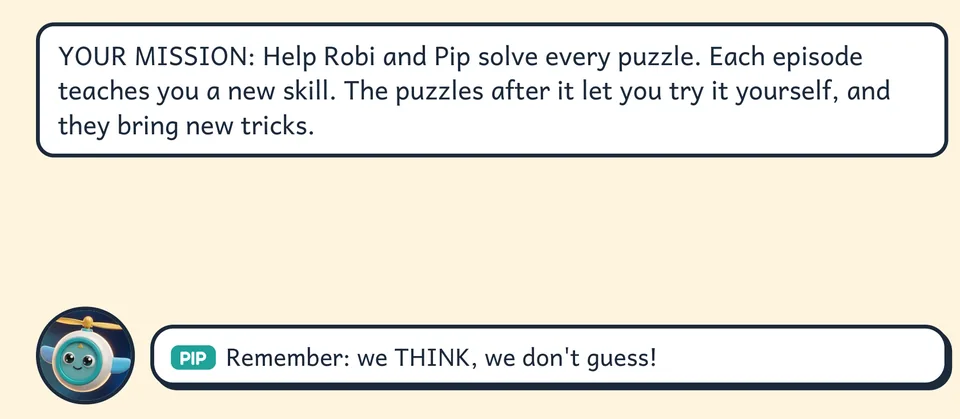
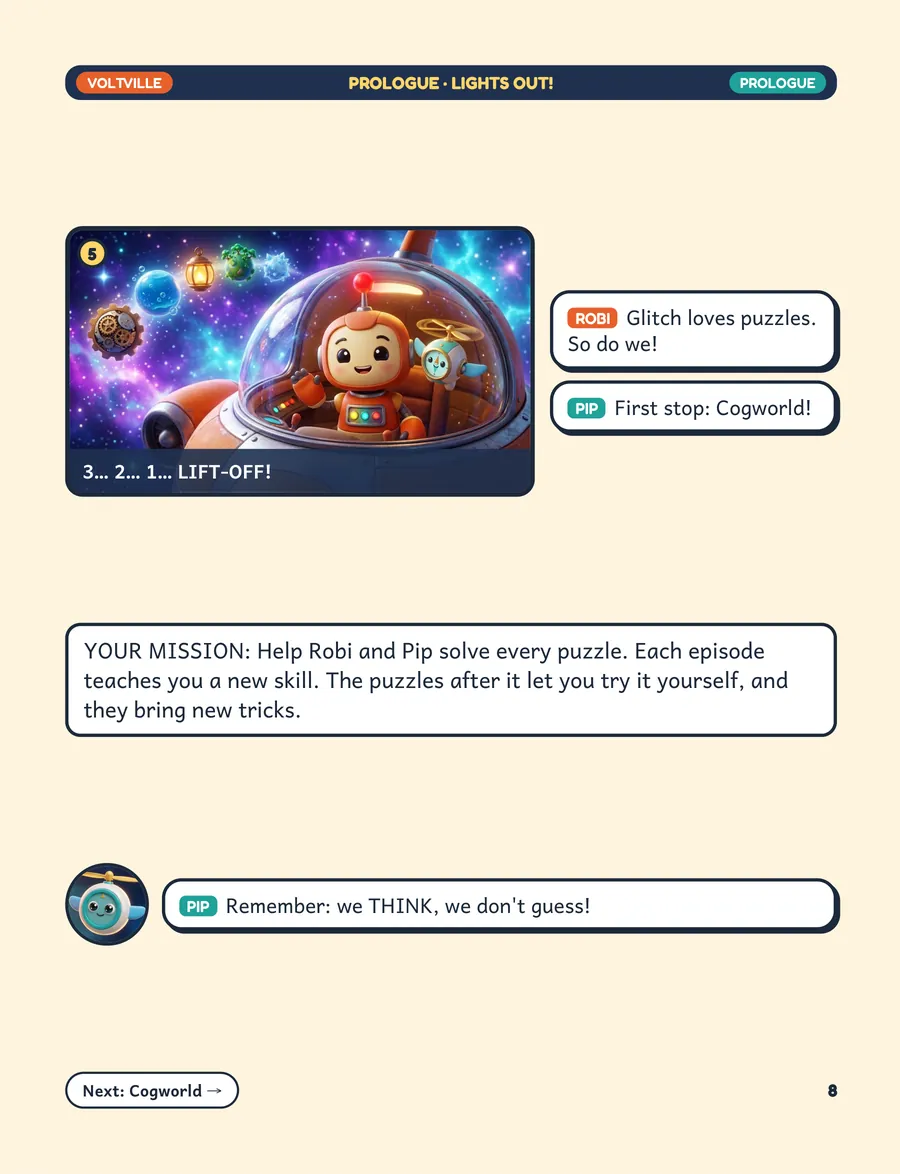
Before Robi lifts off, Pip sets the rule of the whole series:
Remember: we THINK, we don’t guess!
The museum tells its reader the same on page 3:
You never have to guess: if you are stuck, there is something on the page you have not used yet.
Book 1, page 8. See the whole page → It is shown before it is asked
The note for grown-ups in the comics says it plainly:
Every new trick is explained before your child needs it.
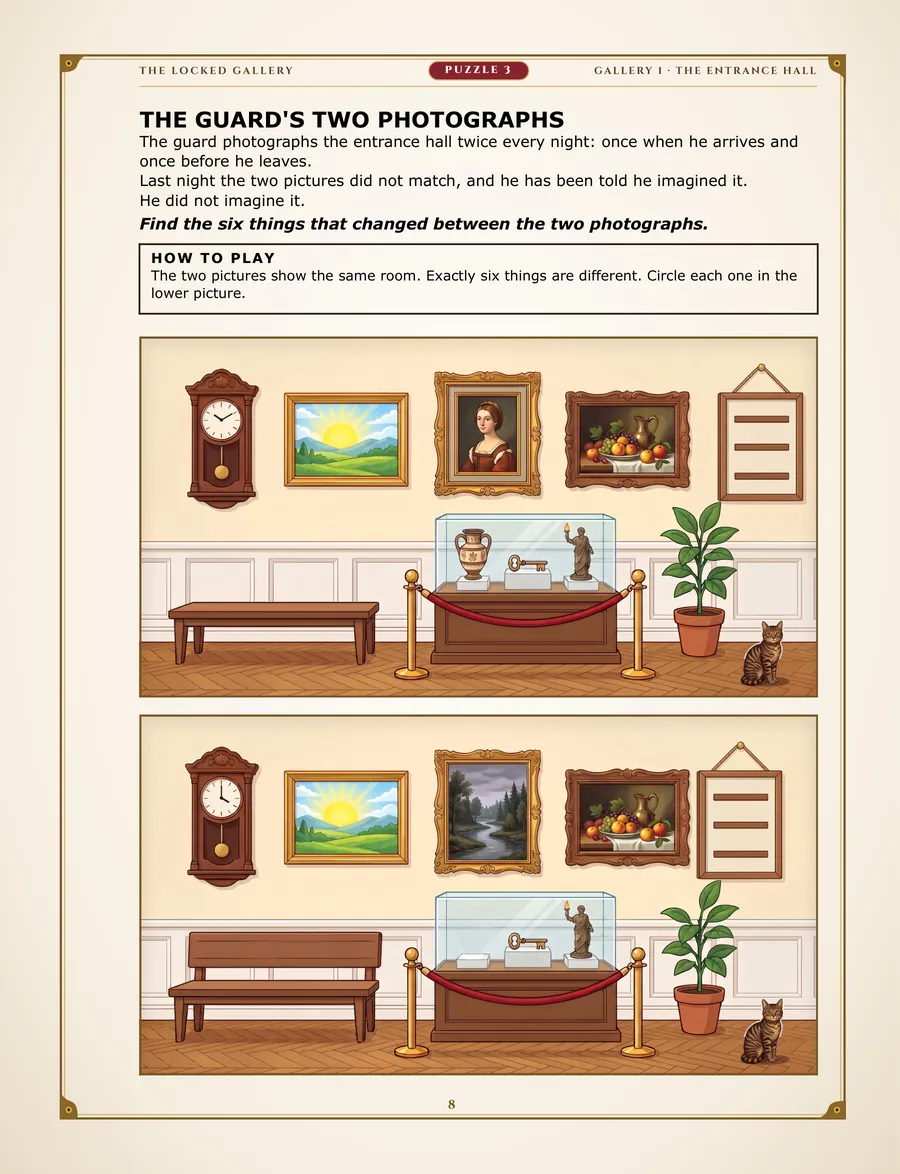
In the museum, a box explains each new kind of puzzle the first time it turns up.
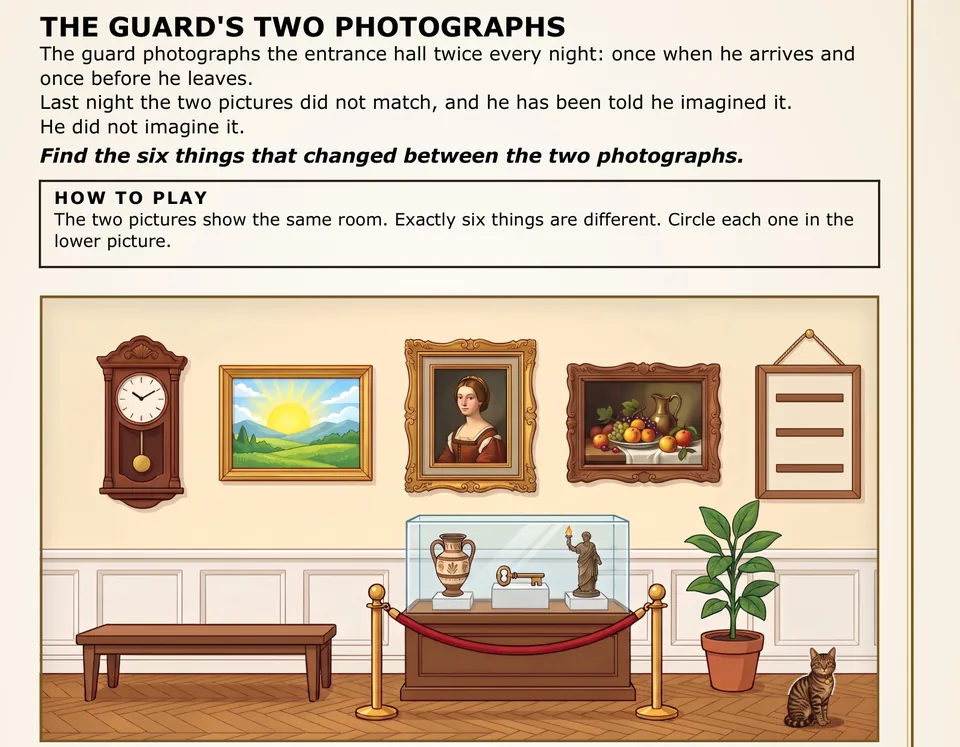
The Locked Gallery, page 8: a “How to play” box. See the whole page → Help that stays within reach
A stuck child is sent back to the method, not to the answer:
Stuck? Go back to the Brain-Scan page of that episode.
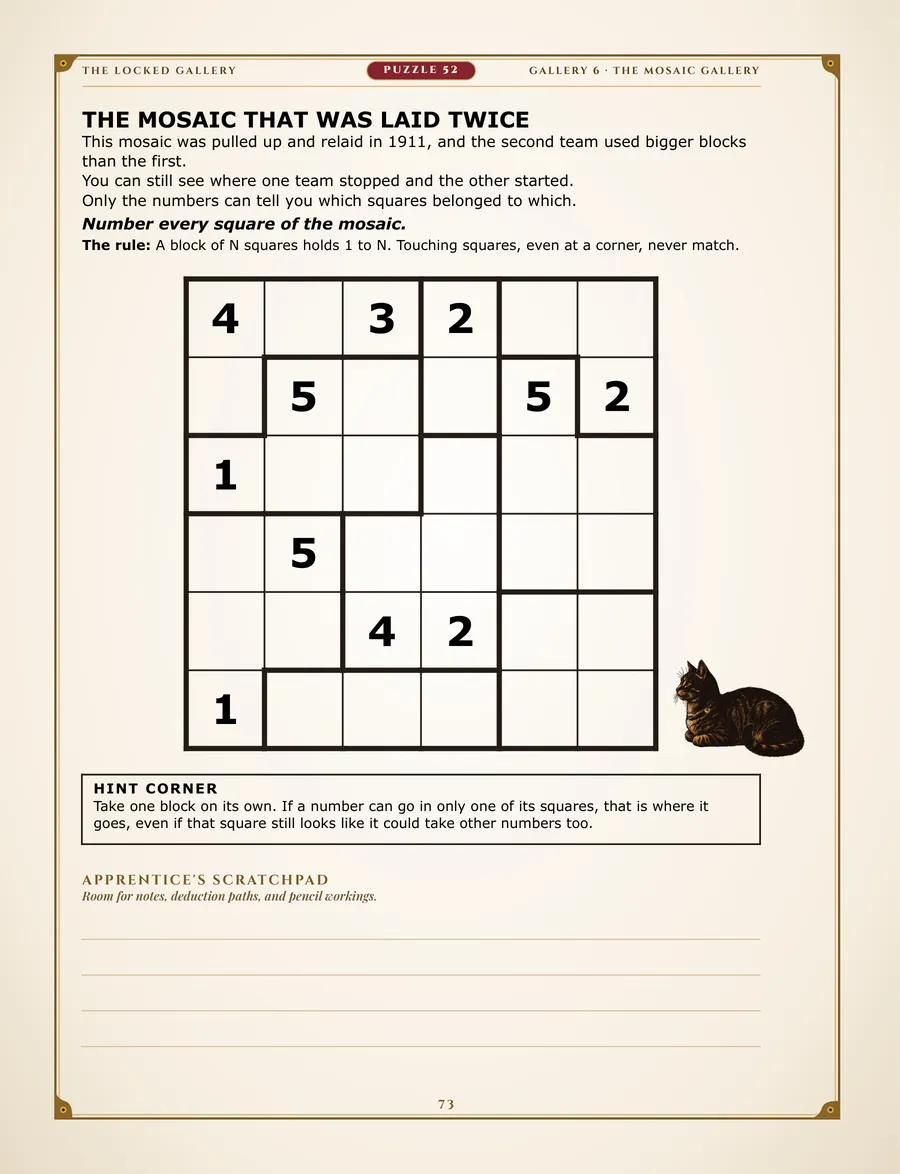
The museum prints a hint on where to start, and says of its answers:
Use them to check, not to finish.
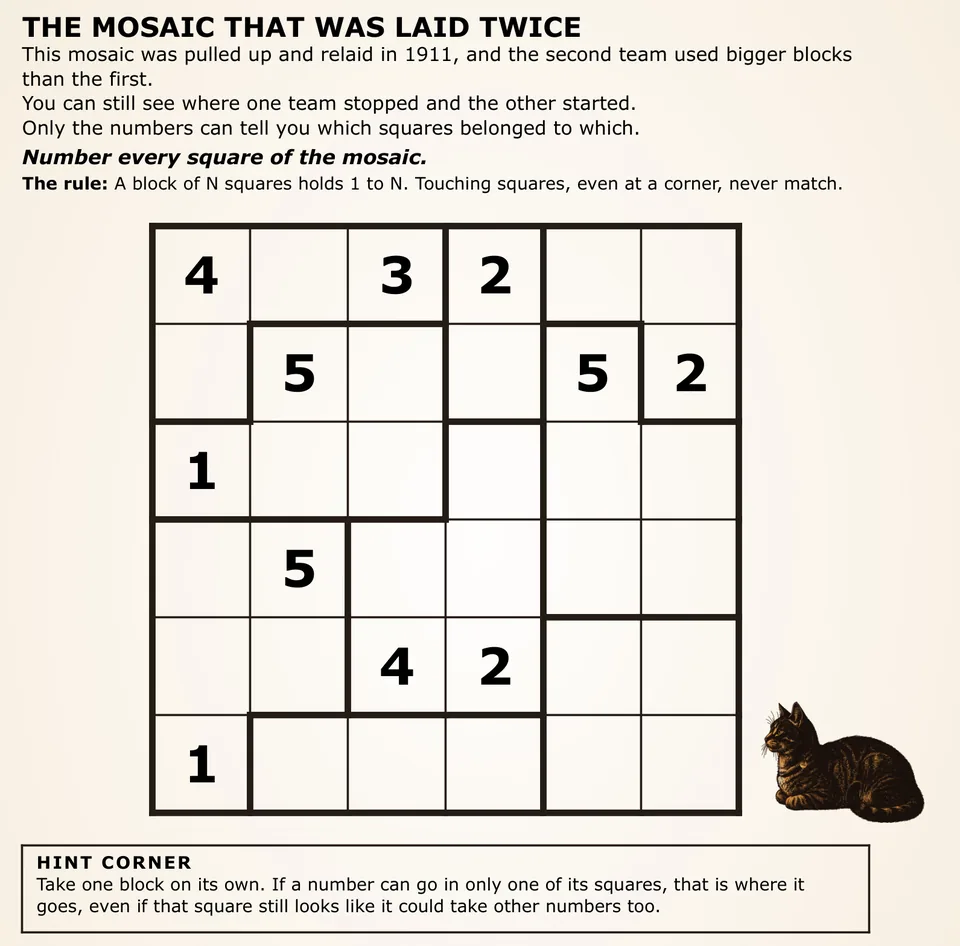
The Locked Gallery, page 73: a hint corner. See the whole page → Mistakes are part of it
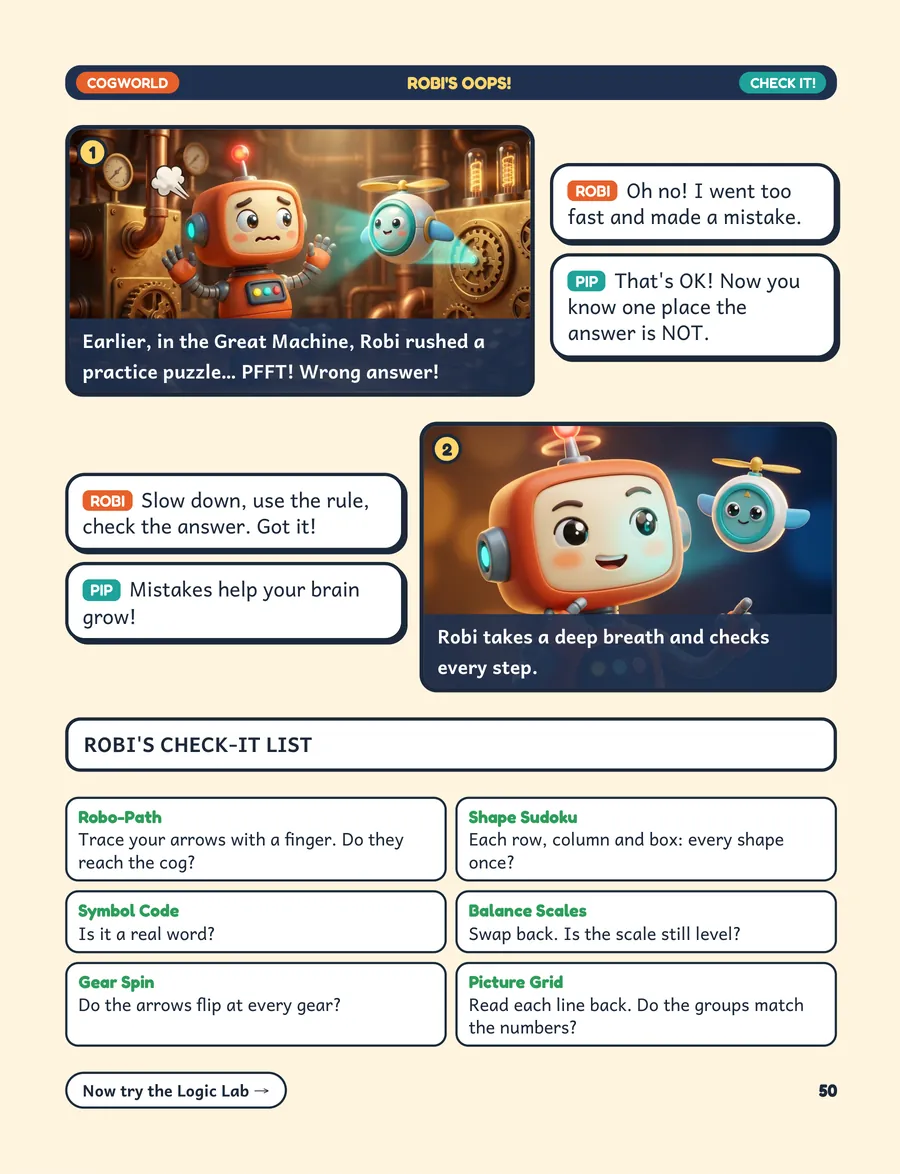
Mistakes are part of the fun: an eraser is a puzzle tool.
Robi even has his own “Oops!” page about slowing down and checking the answer.
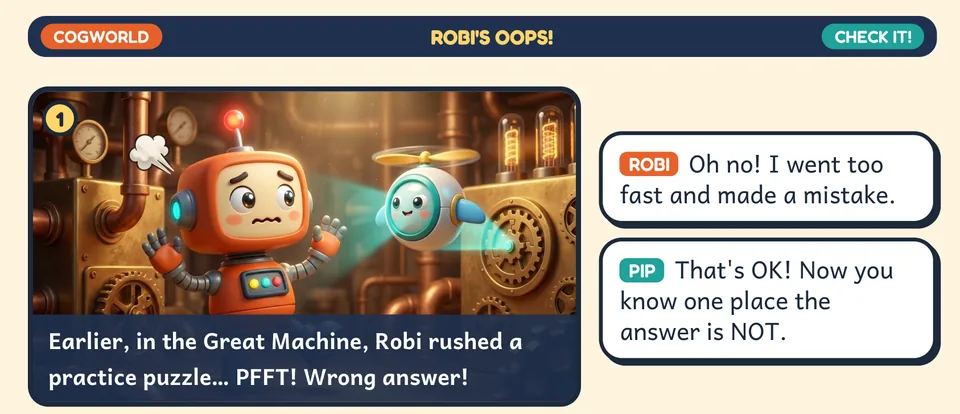
Book 1, page 50: Robi’s Oops! See the whole page → The climb is gentle, and the book says so
Stars show difficulty. ★ warm-up, ★★ thinker, ★★★ challenge.
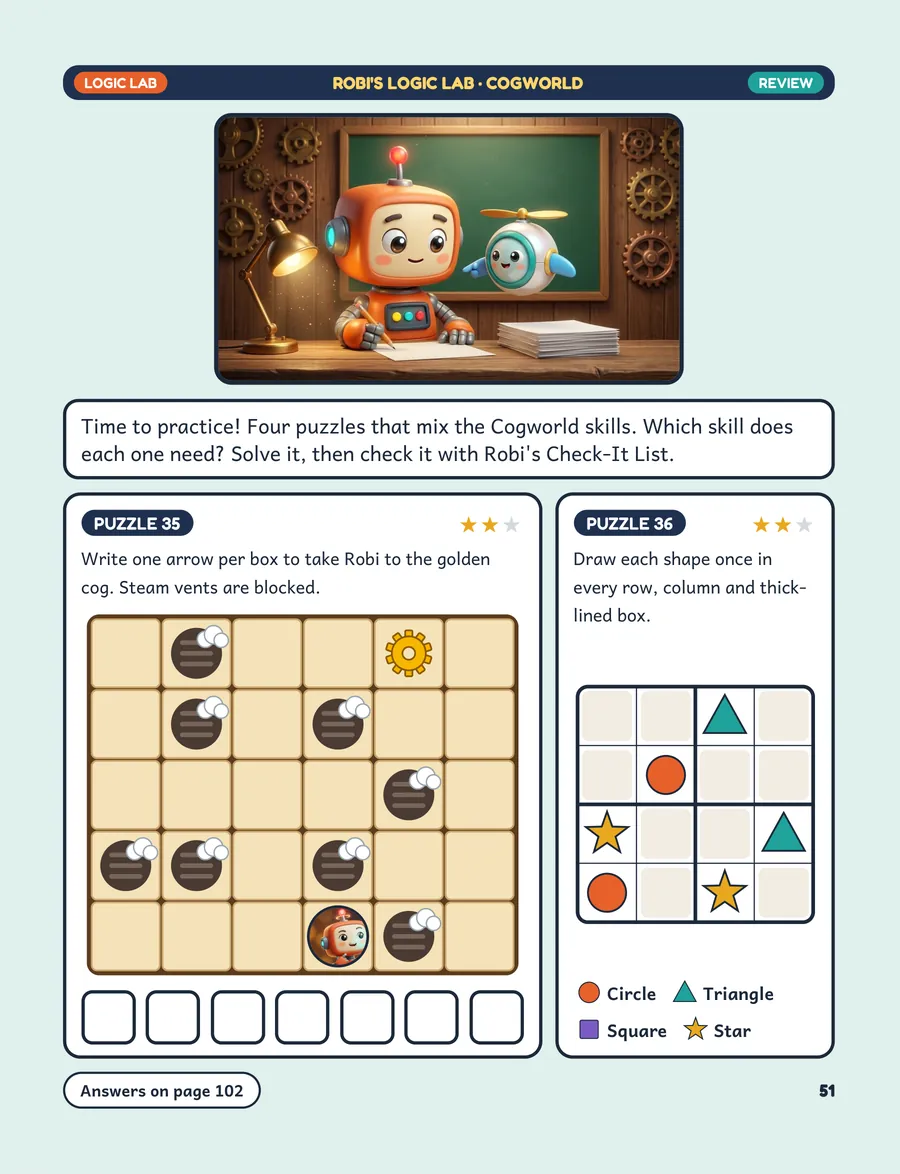
Each planet ends with a boss lock and a logic lab that mixes the skills.In the museum:
The first room is the easy one, and it is the only one that says so.
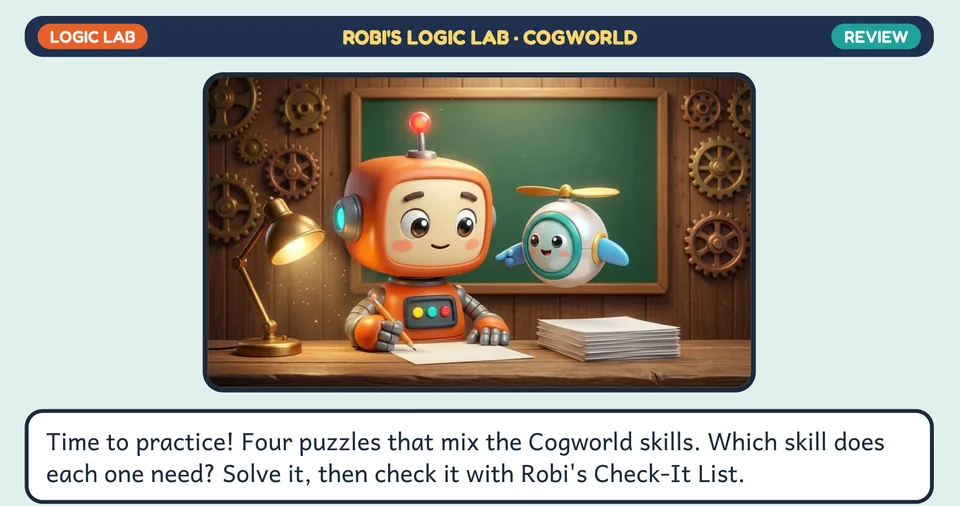
Book 1, page 51: the Logic Lab. See the whole page → Small wins along the way
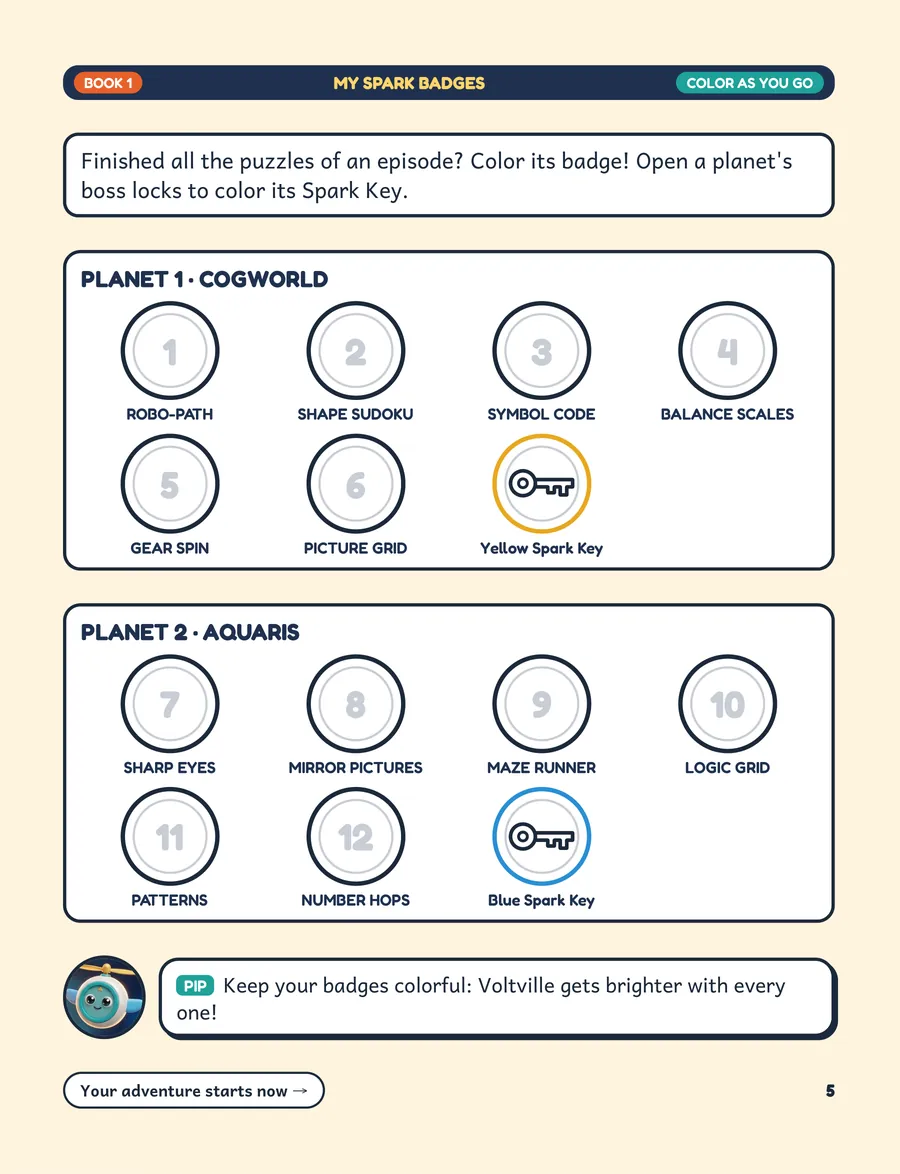
After each episode your child colors a badge, and a certificate waits at the end.
In the museum, each room that is cleared gives one letter for the notebook.
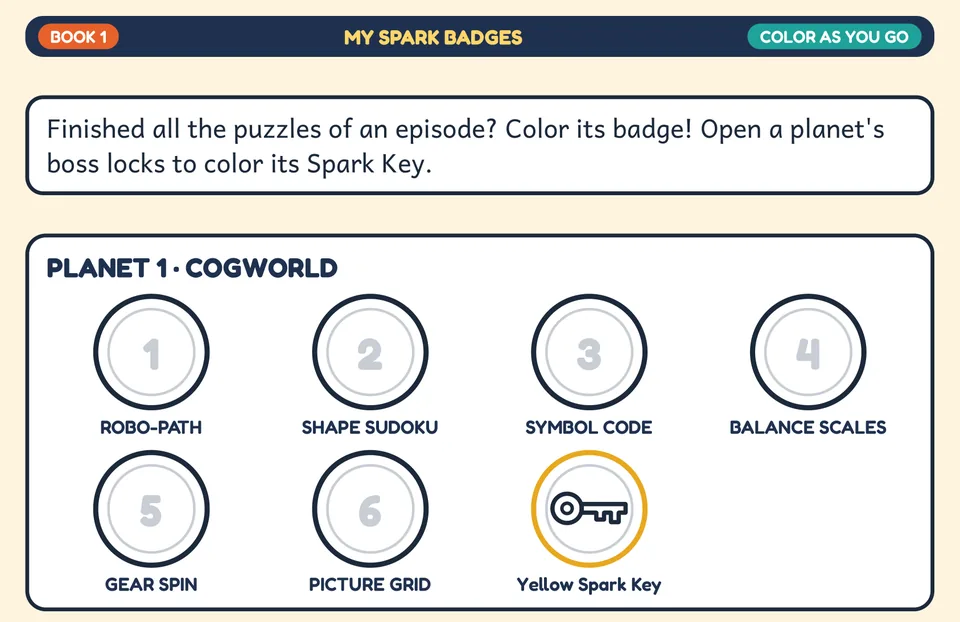
Book 1, page 5: My Spark Badges. See the whole page →
How to help without giving the answer
Three questions from the note for grown-ups in the comics.
What does the rule say?
Which square or clue is the easiest place to start?
How do you know? Can you check it?
Read the comic together: you read Glitch, your child reads Robi!
What each kind of puzzle practices
The books mix kinds on purpose, so a child meets several ways of reasoning.
| Kind of puzzle | What it practices | Where |
|---|---|---|
| Logic grids | Use the clues to cross out what cannot be. What is left has to be true. | Both |
| Sudoku | Find the square where only one shape or number fits. | Both |
| Picture grids (nonograms) | Read the number clues and reason line by line until a picture appears. | Both |
| Mazes and robot paths | Plan a route, or a short program of moves, before the first step. | Both |
| Codes and ciphers | Apply one swap rule the same way every time. | Both |
| Patterns and number hops | Spot the rule, then say what comes next. | Comics |
| Sharp eyes and spot the difference | Check part by part and cross out what does not match. | Both |
| Word searches | Scan patiently. A rest between harder puzzles, good for attention and spelling. | Gallery |
What we do and do not claim
We do not promise grades, scores or a guaranteed result, and no study stands behind these books. What we can show you is how they are built, and every page above is a real page you can find in your copy.
The stories, artwork and puzzles are created with human direction and editorial review, with the assistance of artificial-intelligence tools.